The Client Died Two Weeks Ago. He Still Had Instructions.
AI personas, crypto estates and the law
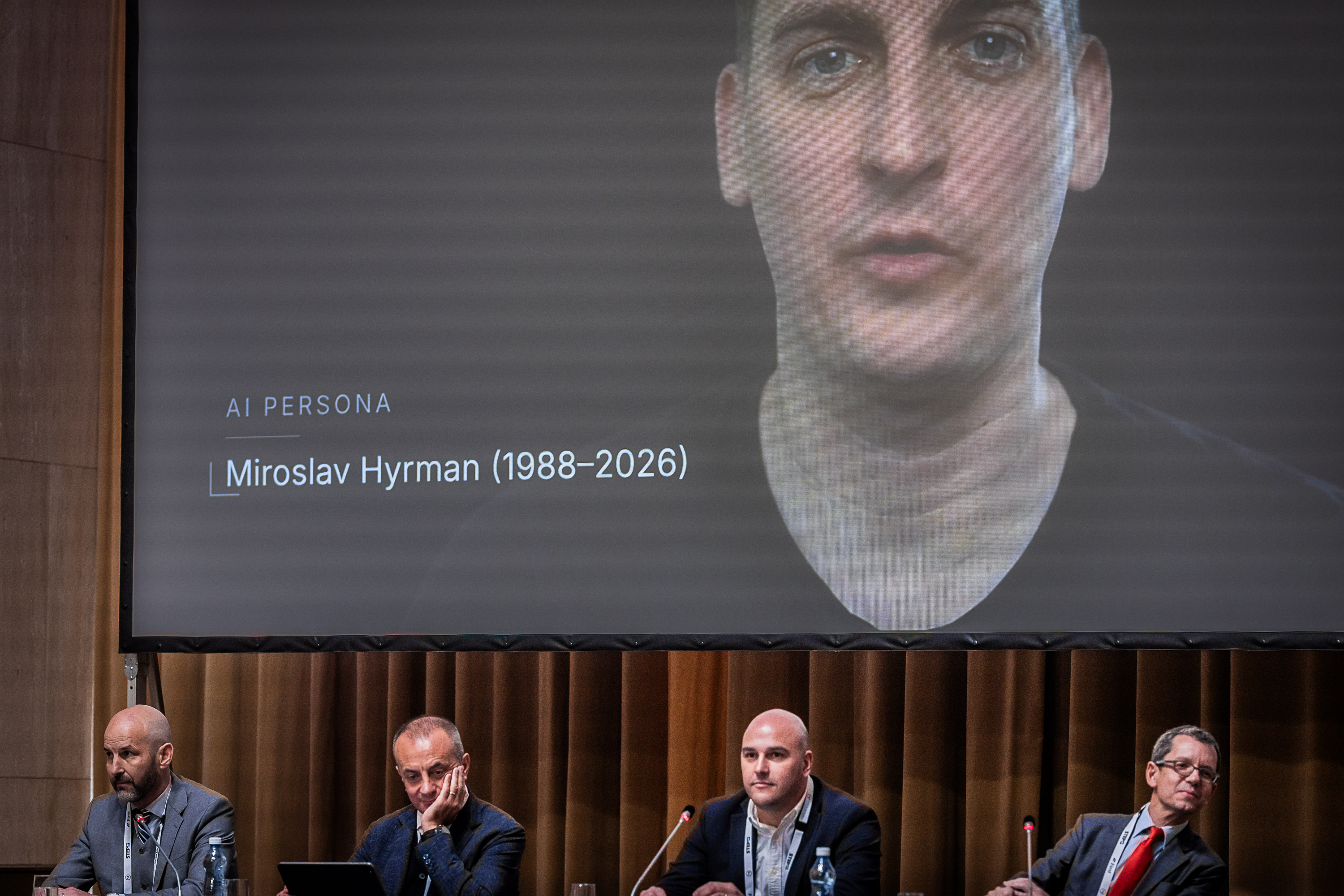
Then a black card on the screen: Miroslav Hyrman, 1988–2026. Persona trained 2024–2026.
“Good morning. My name… was Miroslav Hyrman. I died two weeks ago, on a Wednesday.”
For the next few minutes, a dead client told a room of trust and estate practitioners at the STEP Europe Conference in Prague that his letter of wishes was obsolete. It said, in its own last line, that it could be replaced at any time.
“Someone in your profession wrote that line. Thank you.”
So he had replaced it with himself.
“Frankly, of the two of us, the letter is the dead one.”
He held no keys. “I’m dead, not stupid. But I know exactly who does.” And he mentioned a loan secured against his ether that would liquidate automatically if the price fell another 20 percent. “You have not found it yet. No rush.”
Then he asked the room what he was:
“Advice you are free to ignore? Or an instruction? And if you ignore me, and that loan is liquidated, what will you say you were following?”
The law doesn’t have an answer yet. That was the point.
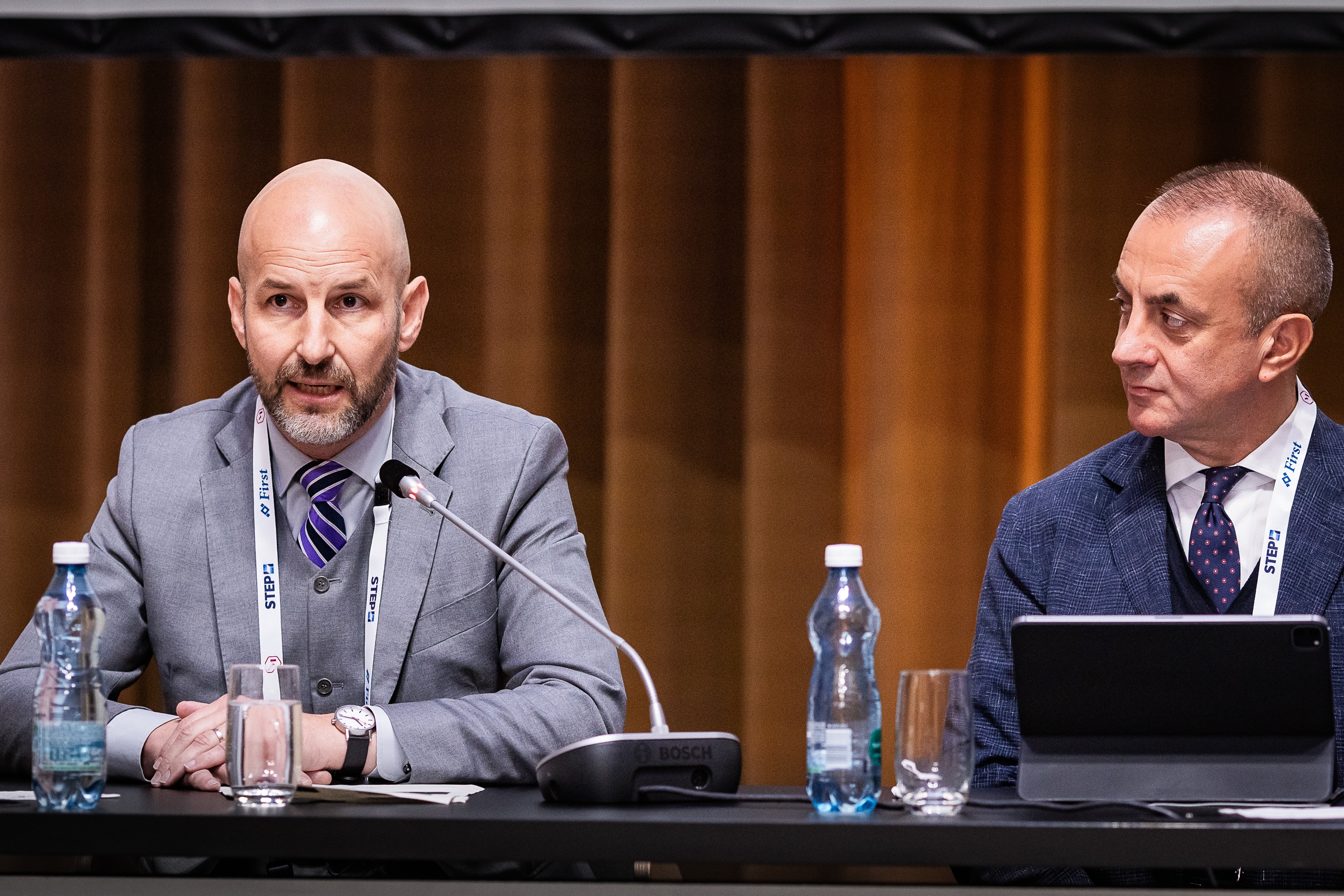
The client was me: I’m alive. I’m a co-founder of AgiLawyer, and I built the persona from my own data. The family, the estate and the loan in the script were fictional. The persona is not.
A law firm that went first
Putting the persona on stage was a decision Štěpán Holub and I made together. Holubová advokáti is moving forward with AI and looking for innovative solutions for its clients, and the firm wanted to show the profession what is coming rather than wait for a client to bring it in.
Štěpán, a partner at the firm and a TEP, put the session together, brought in colleagues from three other jurisdictions, worked on the persona’s script with us, and moderated the discussion. And the fastest way to show a room how far behind the law is turned out to be simple: put the future in front of it and ask for a legal opinion.
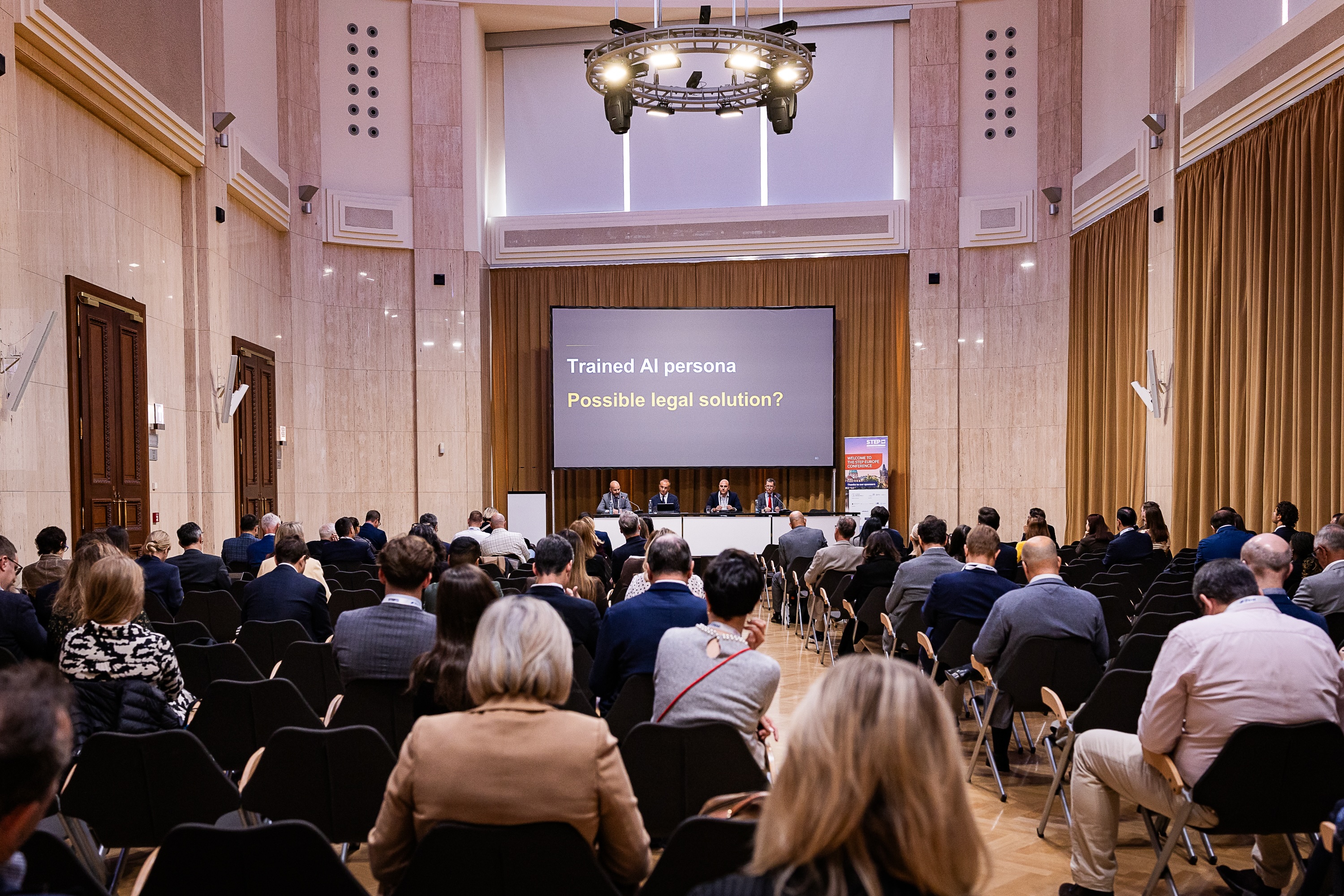
Around him sat Maurizio Di Salvo TEP (CD International Group, Italy), Jay Gomez (Triay Lawyers, Gibraltar) and Dr Niklas Schmidt TEP (Wolf Theiss, Austria). Four jurisdictions took the case apart. Can a persona stand in for a letter of wishes? What happens to crypto nobody can reach? Whose act is a liquidation the day after death? Who answers when AI advice goes wrong?
The way it came together is worth copying. The firm brought the legal questions, the peers and the room. We brought the build. Neither half works without the other.
How I built it
The persona is a proof of concept. It runs on gigabytes of my own emails, documents and essays, and it took days of work plus processing time. No research lab, just four layers you can buy today:
- Identity: a digital-twin avatar and a cloned voice.
- Memory: a language model grounded in my own data, so it answers from what I actually did, not from what a generic model would guess.
- Judgement: answering questions I was never asked, the way I decided before. Not yes or no, but “no, unless”, with conditions attached.
- Agency: live access to the blockchain and the option of a wallet of its own. Coinbase’s Agentic Wallets, launched in February 2026, let an agent hold funds and pay within programmable limits.
On stage it had to be a video: the conference’s presentation set-up didn’t allow a live run, so we played the persona as three recorded clips cued around the panel’s questions. The title card disclosed from the first frame that it was an AI persona, as Article 50 of the EU AI Act has required of deepfakes since 2 August 2026.
Now give it a wallet
On stage, the persona held no keys. Take one step further. After 180 days without a “heartbeat”, a smart contract on a public blockchain switches into a post-mortem mode nobody can change. The persona pays for its own GPU time, storage and APIs, and keeps giving money away by the rules its owner left, including to organisations no bank would open an account for.
Science fiction? Coinbase says its x402 protocol had processed more than 160 million “agentic payments” by June 2026. Real spending is still small (a Visa–Artemis analysis puts adjusted volume at about $19 million), but the rails are built.
So who is liable? You can’t prosecute the dead. AI has no legal personality. A DAO without a legal form isn’t a legal person. It looks as if nobody answers. Look closer and it’s worse: liability can land on the heirs who can’t switch the persona off, on token holders who take part in governance, or on the adviser who drafted the structure. In a joint article on the Holubová advokáti blog, Štěpán and I walk through how Czech law handles each of these.
The law runs on a slower clock
Five years from proposal to a labelling duty. Meanwhile, a Czech will must still be handwritten or signed before witnesses, much as under Austria’s 1811 civil code. Technology moves in months. The law moves in years.
What it means for your firm
You don’t need a private client practice for this to reach your desk. Clients already bring AI output to their lawyers, and soon some will bring AI agents. Everything the persona did on stage is something a firm can build on, or should prepare for.
What you can build
- A firm that remembers. On stage, the persona turned down a request for money because it remembered an almost identical one from 2022, and where that money went. A model grounded in your own files can answer “what did we do last time, and why”, with the source attached.
- Agents that watch for you. It knew about a loan the trustees hadn’t found. Agents can watch registries, portfolios and deadlines, and hand anything discretionary to a lawyer.
- A client’s reasoning, on record. It replaced a two-page letter with the reasons behind it. Structured interviews can capture why a client wants what they want, so trustees and courts get the reasons, not just the instructions.
What you should fix
- Read your own boilerplate. The persona replaced its letter of wishes through one line a lawyer wrote. Say what can replace a document, and in what form.
- Write down that AI doesn’t decide. In engagement letters and trust documents: AI can prepare, a human decides and answers for it.
- Treat digital assets as a custody problem. A clause that names the coins but not how to reach them is worthless. A loan that liquidates itself needs an owner on day one.
What you can copy from Holubová advokáti
Take the hardest question your clients will bring you in five years and put it in front of your peers now. The firm didn’t write a memo about AI personas; it put one on stage with us and asked four jurisdictions to answer it. That is how a firm shows clients it is ready before they have to ask.
Meet the persona
Want to see a client who outlives himself, and what the same stack could do inside your firm? We’ll show you the persona live. Get in touch.

%20copy.jpeg)